Can waveform residuals in gravitational-wave data distinguish the claimed effect from detector noise?

Selected topic

Can waveform residuals in gravitational-wave data distinguish the claimed effect from detector noise?

This topic uses LIGO Virgo noise-subtraction work to test whether waveform residuals remain after detector noise is removed. The next pass should compare the residual claim against conservative data-quality limits.

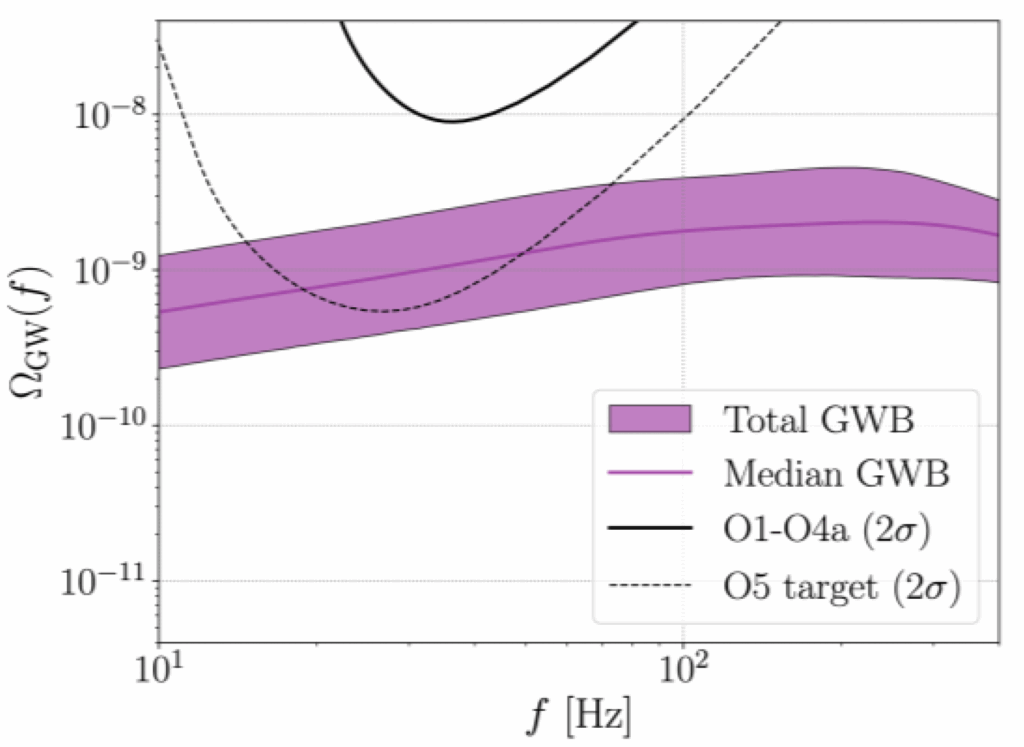
Upper Limits on the Isotropic Gravitational-Wave Background from the first part of LIGO, Virgo and KAGRA's fourth Observing RunLIGO-Virgo-KAGRAGravitational wavescandidateRun 2: Extract the testable claim
Research questionCan waveform residuals in gravitational-wave data distinguish the claimed effect from detector noise?Source basisUpper Limits on the Isotropic Gravitational-Wave Background from the first part of LIGO, Virgo and KAGRA's fourth Observing RunSelected at24 Sept 2026, 03:00

Run history

Runs for this topic

2 runs recorded
Run 2: Extract the testable claimALIVE

Can waveform residuals in gravitational-wave data distinguish the claimed effect from detector noise?

The source provides a relevant merger dataset, but it does not directly test delayed ringdown residuals.

Summary

The source provides a relevant merger dataset, but it does not directly test delayed ringdown residuals.

Hypothesis

Can waveform residuals in gravitational-wave data distinguish the claimed effect from detector noise?

Objection

The hypothesis may still be too permissive unless the effect is separated from detector noise.

Next test

Which black-hole merger dataset provides the strongest constraints on delayed ringdown residuals?

Why it matters
  • It shows whether the topic can be tested with real observations instead of speculative language.
  • It keeps the analysis focused on ringdown data, residuals, and clean upper bounds.
  • It helps distinguish observational constraints from theoretical storytelling.
Evidence used
  • The stochastic gravitational wave background: from models to observation University of Antwerp

    It keeps gravitational wave tied to one testable mechanism and a concrete observable.

  • Neural Network Guided Parameter Space Constraints for Gravitational Wave Searches from Binary Black Holes arXiv gr-qc

    It keeps part tied to one testable mechanism and a concrete observable.

  • A Transparent, Training-Free Inter-Detector Cross-Correlation Statistic for Short Gravitational-Wave Transients: Statistical Validation on LIGO O1/O2 Open Data Zenodo (CERN European Organization for Nuclear Research)

    It keeps gravitational wave tied to one testable mechanism and a concrete observable.

Run 1: Define the concrete questionALIVE

Can waveform residuals in gravitational-wave data distinguish the claimed effect from detector noise?

The source provides a relevant gravitational-wave dataset, but it does not directly test the observable claim.

Summary

The source provides a relevant gravitational-wave dataset, but it does not directly test the observable claim.

Hypothesis

Can waveform residuals in gravitational-wave data distinguish the claimed effect from detector noise?

Objection

The topic may still be too broad unless it identifies the exact observable or catalog result under test.

Next test

Which gravitational-wave observable or dataset would make this topic testable in the next pass?

Why it matters
  • It keeps the topic tied to an observable gravitational-wave or detector constraint instead of a broad label.
  • It shows which dataset or catalog result would actually move the claim forward.
  • It helps distinguish a measurable bound from a headline-level association.
Evidence used
  • The stochastic gravitational wave background: from models to observation University of Antwerp

    It stays close to gravitational wave and supports the concrete question pass.

  • Non-Parametric Reconstruction of the Hubble Parameter from the Fourth Gravitational Wave Transient Catalog and DESI Baryonic Acoustic Oscillations Classical and Quantum Gravity

    It stays close to gravitational wave and supports the concrete question pass.

  • First-Principles Derivation of the Cosmological Constant and Observational Search for Golden Ratio Structure in Cosmological Data: Contrasting Results from LIGO, DESI, and the UAT Framework Zenodo (CERN European Organization for Nuclear Research)

    It stays close to first and supports the concrete question pass.