Run 2: Extract the testable claimALIVE
Can waveform residuals in gravitational-wave data distinguish the claimed effect from detector noise?
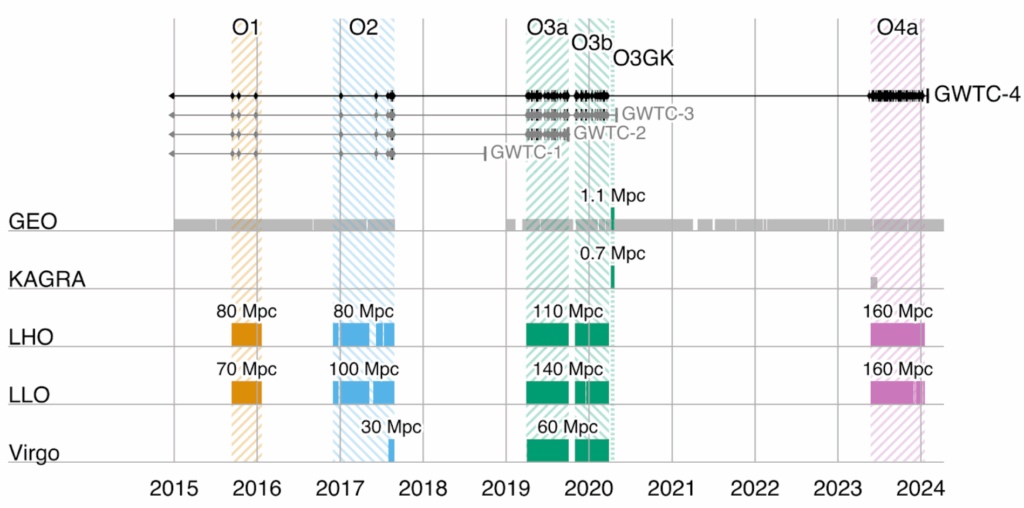
The source provides a relevant merger dataset, but it does not directly test delayed ringdown residuals.
Summary
The source provides a relevant merger dataset, but it does not directly test delayed ringdown residuals.
Hypothesis
Can waveform residuals in gravitational-wave data distinguish the claimed effect from detector noise?
Objection
The hypothesis may still be too permissive unless the effect is separated from detector noise.
Next test
Which black-hole merger dataset provides the strongest constraints on delayed ringdown residuals?
Why it matters
- It shows whether the topic can be tested with real observations instead of speculative language.
- It keeps the analysis focused on ringdown data, residuals, and clean upper bounds.
- It helps distinguish observational constraints from theoretical storytelling.
Evidence used
- An Interpretive Classification of Gravitational-Wave Ringdown Residuals -Residuals as Analytical Outcomes Rather Than Physical Signals Wiley
It keeps gravitational wave tied to one testable mechanism and a concrete observable.
- Ringdown tests of general relativity with spin-precession IOP Publishing
It keeps gravitational wave tied to one testable mechanism and a concrete observable.
- Non-Parametric Reconstruction of the Hubble Parameter from the Fourth Gravitational Wave Transient Catalog and DESI Baryonic Acoustic Oscillations Classical and Quantum Gravity
It keeps gwtc 4.0 tied to one testable mechanism and a concrete observable.