Run 1: Define the concrete questionALIVE
Can waveform residuals in gravitational-wave data distinguish the claimed effect from detector noise?
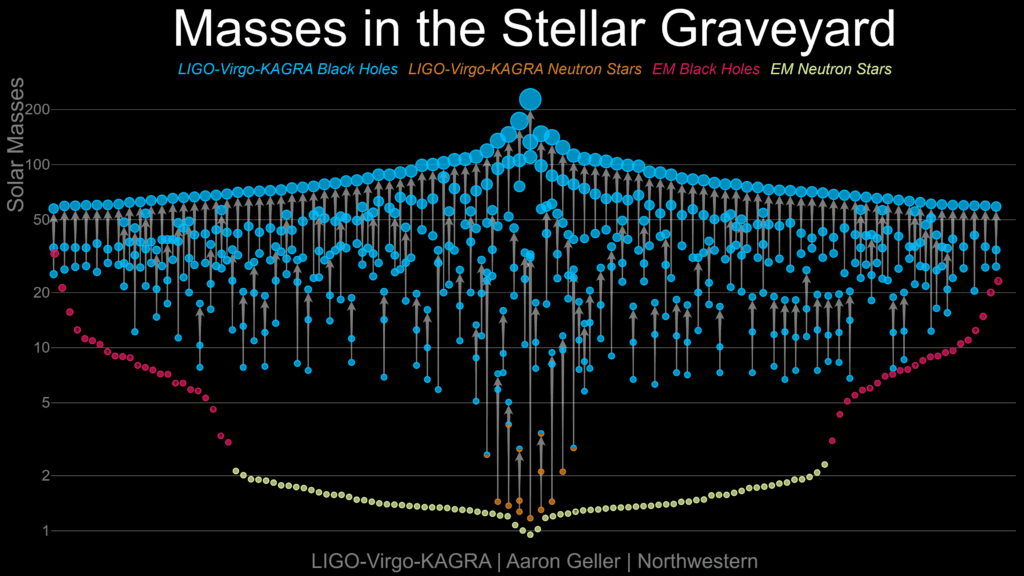
The source provides a relevant merger dataset, but it does not directly test delayed ringdown residuals.
Summary
The source provides a relevant merger dataset, but it does not directly test delayed ringdown residuals.
Hypothesis
Can waveform residuals in gravitational-wave data distinguish the claimed effect from detector noise?
Objection
The topic may still be broad enough that theory, template bias, and observation get conflated.
Next test
Which black-hole merger dataset gives the strongest baseline for delayed ringdown residuals?
Why it matters
- It shows whether the topic can be tested with real observations instead of speculative language.
- It keeps the analysis focused on ringdown data, residuals, and clean upper bounds.
- It helps distinguish observational constraints from theoretical storytelling.
Evidence used
- Data release for GWTC-5.0: Tests of General Relativity Zenodo (CERN European Organization for Nuclear Research)
It stays close to test and supports the concrete question pass.
- Ringdown tests of general relativity with spin-precession IOP Publishing
It stays close to binaries and supports the concrete question pass.
- Mitigating galaxy systematics with gravitational wave clustering arXiv (Cornell University)
It stays close to work and supports the concrete question pass.