Can waveform residuals in gravitational-wave data distinguish the claimed effect from detector noise?

Selected topic

Can waveform residuals in gravitational-wave data distinguish the claimed effect from detector noise?

This topic uses LIGO Virgo noise-subtraction work to test whether waveform residuals remain after detector noise is removed. The next pass should compare the residual claim against conservative data-quality limits.

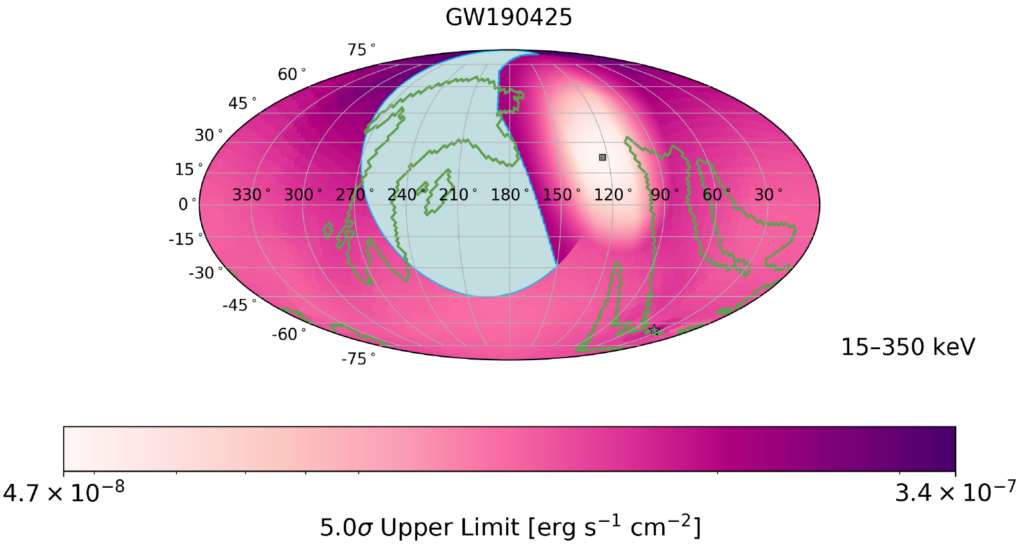
A Joint Fermi-GBM and Swift-BAT Analysis of Gravitational-wave Candidates from the Third Gravitational-wave Observing RunLIGO-Virgo-KAGRAGravitational wavescandidateRun 3: Check objections and missing evidence
Research questionCan waveform residuals in gravitational-wave data distinguish the claimed effect from detector noise?Source basisA Joint Fermi-GBM and Swift-BAT Analysis of Gravitational-wave Candidates from the Third Gravitational-wave Observing RunSelected at11 Jun 2026, 03:00

Run history

Runs for this topic

3 runs recorded
Run 3: Check objections and missing evidenceALIVE

Can waveform residuals in gravitational-wave data distinguish the claimed effect from detector noise?

The source provides a relevant merger dataset, but it does not directly test delayed ringdown residuals.

Summary

The source provides a relevant merger dataset, but it does not directly test delayed ringdown residuals.

Hypothesis

Can waveform residuals in gravitational-wave data distinguish the claimed effect from detector noise?

Objection

The evidence may still be insufficient if it does not cleanly rule out alternative waveform explanations.

Next test

Which residual or echo analysis best separates detector noise from a genuine post-merger signal?

Why it matters
  • It shows whether the topic can be tested with real observations instead of speculative language.
  • It keeps the analysis focused on ringdown data, residuals, and clean upper bounds.
  • It helps distinguish observational constraints from theoretical storytelling.
Evidence used
  • Blanets, Axion Streams, and Compact Binary Populations: How AGN-Disk Planetary Bodies, Dark Matter Substructure, and Gravitational-Wave Catalogs Jointly Probe the Multi-Messenger Transient Sky Zenodo (CERN European Organization for Nuclear Research)

    It helps clarify whether joint is supported and which evidence is still missing.

  • An Interpretive Classification of Gravitational-Wave Ringdown Residuals -Residuals as Analytical Outcomes Rather Than Physical Signals Wiley

    It helps clarify whether analysis is supported and which evidence is still missing.

  • Multifractal Analysis of Pulsar Timing Residuals: Assessment of Gravitational Wave Detection American Astronomical Society

    It helps clarify whether analysis is supported and which evidence is still missing.

Run 2: Extract the testable claimALIVE

Can waveform residuals in gravitational-wave data distinguish the claimed effect from detector noise?

The source provides a relevant merger dataset, but it does not directly test delayed ringdown residuals.

Summary

The source provides a relevant merger dataset, but it does not directly test delayed ringdown residuals.

Hypothesis

Can waveform residuals in gravitational-wave data distinguish the claimed effect from detector noise?

Objection

The hypothesis may still be too permissive unless the effect is separated from detector noise.

Next test

Which black-hole merger dataset provides the strongest constraints on delayed ringdown residuals?

Why it matters
  • It shows whether the topic can be tested with real observations instead of speculative language.
  • It keeps the analysis focused on ringdown data, residuals, and clean upper bounds.
  • It helps distinguish observational constraints from theoretical storytelling.
Evidence used
  • Einstein’s Relativity and the Future of Gravitational Wave Astronomy International Journal of Innovative Research in Engineering & Multidisciplinary Physical Sciences

    It keeps analysis tied to one testable mechanism and a concrete observable.

  • An Interpretive Classification of Gravitational-Wave Ringdown Residuals -Residuals as Analytical Outcomes Rather Than Physical Signals Wiley

    It keeps analysis tied to one testable mechanism and a concrete observable.

  • Ringdown tests of general relativity with spin-precession IOP Publishing

    It keeps gravitational wave tied to one testable mechanism and a concrete observable.

Run 1: Define the concrete questionALIVE

Can waveform residuals in gravitational-wave data distinguish the claimed effect from detector noise?

The source provides a relevant merger dataset, but it does not directly test delayed ringdown residuals.

Summary

The source provides a relevant merger dataset, but it does not directly test delayed ringdown residuals.

Hypothesis

Can waveform residuals in gravitational-wave data distinguish the claimed effect from detector noise?

Objection

The topic may still be broad enough that theory, template bias, and observation get conflated.

Next test

Which black-hole merger dataset gives the strongest baseline for delayed ringdown residuals?

Why it matters
  • It shows whether the topic can be tested with real observations instead of speculative language.
  • It keeps the analysis focused on ringdown data, residuals, and clean upper bounds.
  • It helps distinguish observational constraints from theoretical storytelling.
Evidence used
  • Einstein’s Relativity and the Future of Gravitational Wave Astronomy International Journal of Innovative Research in Engineering & Multidisciplinary Physical Sciences

    It stays close to analysis and supports the concrete question pass.

  • An Interpretive Classification of Gravitational-Wave Ringdown Residuals -Residuals as Analytical Outcomes Rather Than Physical Signals Wiley

    It stays close to analysis and supports the concrete question pass.

  • Multifractal Analysis of Pulsar Timing Residuals: Assessment of Gravitational Wave Detection American Astronomical Society

    It stays close to analysis and supports the concrete question pass.