Run 1: Define the concrete questionALIVE
Can waveform residuals in gravitational-wave data survive detector noise?
The source provides a relevant merger dataset, but it does not directly test delayed ringdown residuals.
Summary
The source provides a relevant merger dataset, but it does not directly test delayed ringdown residuals.
Hypothesis
Can waveform residuals in gravitational-wave data survive detector noise?
Objection
The topic may still be broad enough that theory, template bias, and observation get conflated.
Next test
Which black-hole merger dataset gives the strongest baseline for delayed ringdown residuals?
Why it matters
- It shows whether the topic can be tested with real observations instead of speculative language.
- It keeps the analysis focused on ringdown data, residuals, and clean upper bounds.
- It helps distinguish observational constraints from theoretical storytelling.
Evidence used
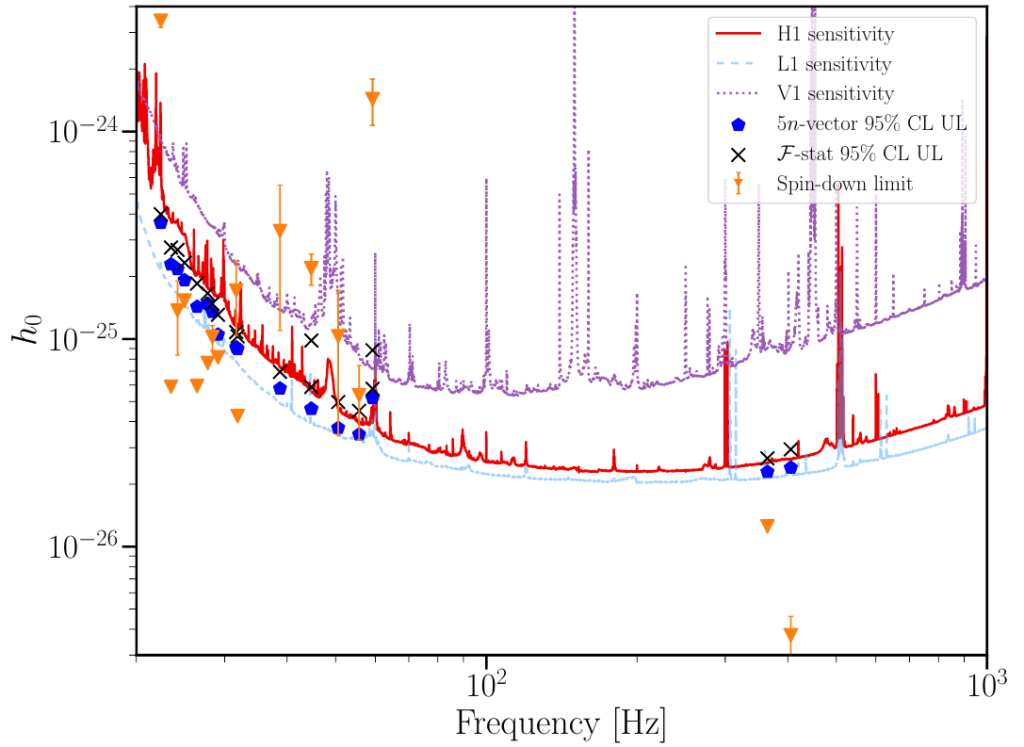
- Narrowband Searches for Continuous Gravitational Waves from known Pulsars in the First Two Parts of the Fourth LIGO–Virgo–KAGRA Observing Run The Astrophysical Journal
It stays close to narrowband and supports the concrete question pass.
- Analysis Of Black Hole Merger from Gravitational Wave Generation and Observation Darcy & Roy Press Co. Ltd.
It stays close to gravitational and supports the concrete question pass.
- An "inside-out" approach to modeling supermassive black hole binary inspiral arXiv astro-ph.HE
It stays close to gravitational and supports the concrete question pass.