Run 2: Extract the testable claimPROMISING
Can waveform residuals in gravitational-wave data survive detector noise?
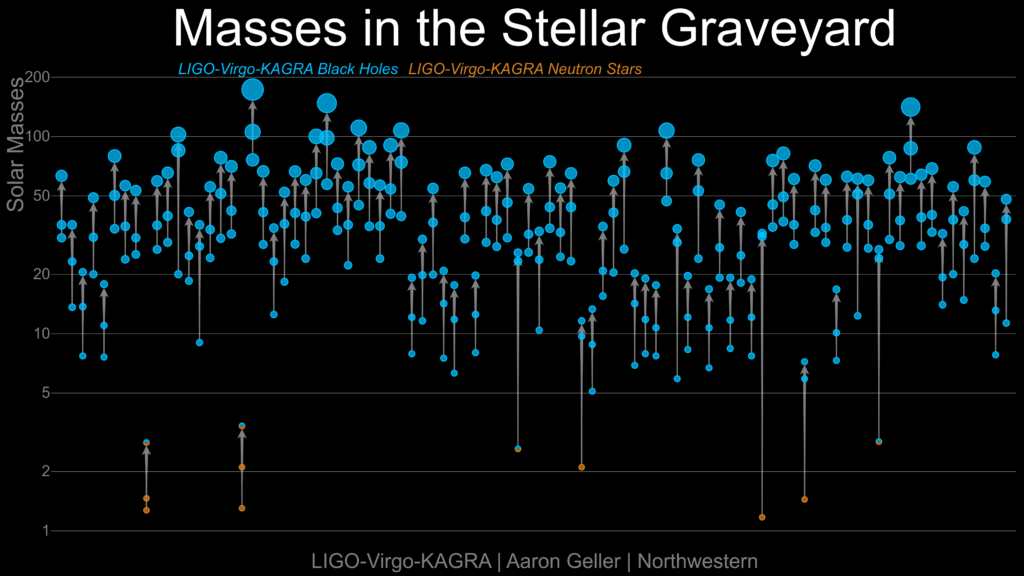
The source provides a relevant merger dataset, but it does not directly test delayed ringdown residuals.
Summary
The source provides a relevant merger dataset, but it does not directly test delayed ringdown residuals.
Hypothesis
Can waveform residuals in gravitational-wave data survive detector noise?
Objection
The hypothesis may still be too permissive unless the effect is separated from detector noise.
Next test
Which black-hole merger dataset provides the strongest constraints on delayed ringdown residuals?
Why it matters
- It shows whether the topic can be tested with real observations instead of speculative language.
- It keeps the analysis focused on ringdown data, residuals, and clean upper bounds.
- It helps distinguish observational constraints from theoretical storytelling.
Evidence used
- LIGO A♯♯: Detector Design and Science Prospects Beyond A+ MPG.PuRe (Max Planck Society)
It keeps compact tied to one testable mechanism and a concrete observable.
- Analysis Of Black Hole Merger from Gravitational Wave Generation and Observation Darcy & Roy Press Co. Ltd.
It keeps ligo tied to one testable mechanism and a concrete observable.
- Ringdown tests of general relativity with spin-precession IOP Publishing
It keeps third tied to one testable mechanism and a concrete observable.