Run 3: Check objections and missing evidenceALIVE
Can waveform residuals in gravitational-wave data survive detector noise?
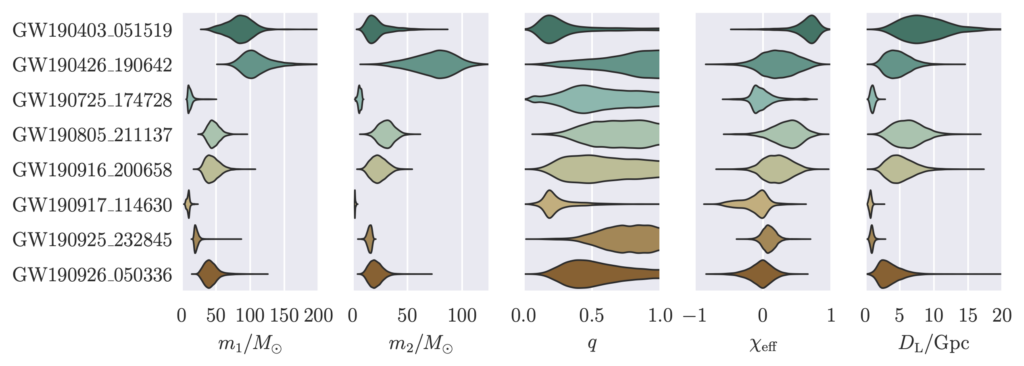
The source provides a relevant merger dataset, but it does not directly test delayed ringdown residuals.
Summary
The source provides a relevant merger dataset, but it does not directly test delayed ringdown residuals.
Hypothesis
Can waveform residuals in gravitational-wave data survive detector noise?
Objection
The evidence may still be insufficient if it does not cleanly rule out alternative waveform explanations.
Next test
Which residual or echo analysis best separates detector noise from a genuine post-merger signal?
Why it matters
- It shows whether the topic can be tested with real observations instead of speculative language.
- It keeps the analysis focused on ringdown data, residuals, and clean upper bounds.
- It helps distinguish observational constraints from theoretical storytelling.
Evidence used
- GWTC-5.0: Tests of General Relativity arXiv gr-qc
It helps clarify whether catalog is supported and which evidence is still missing.
- Gravitational-wave data analysis for standard and non-standard sources of compact binary coalescences in the third LIGO-Virgo observing run Agence Bibliographique de l'Enseignement Supérieur
It helps clarify whether compact is supported and which evidence is still missing.
- Gravitational wave echoes as probes of the maximum mass of strange stars in quadratic curvature-matter coupled gravity arXiv gr-qc
It helps clarify whether compact is supported and which evidence is still missing.