Run 6: Set the cautious verdictALIVE
Can ringdown residuals in black-hole merger data distinguish the claimed effect from detector noise?
The source provides a relevant merger dataset, but it does not directly test delayed ringdown residuals.
SummaryThe source provides a relevant merger dataset, but it does not directly test delayed ringdown residuals.
HypothesisCan ringdown residuals in black-hole merger data distinguish the claimed effect from detector noise?
ObjectionThe final verdict still hinges on whether the null result is strong enough to close the case.
Next testWhich clean ringdown dataset most directly falsifies the claim that delayed residuals survive conservative noise checks?
Why it matters- It shows whether the topic can be tested with real observations instead of speculative language.
- It keeps the analysis focused on ringdown data, residuals, and clean upper bounds.
- It helps distinguish observational constraints from theoretical storytelling.
Evidence used- Source models of ultrahigh-energy cosmic rays arXiv (Cornell University)
It stays close to intermediate and supports the cautious verdict pass.
- Black Holes - NASA Science NASA
It stays close to search and supports the cautious verdict pass.
- Orbital Mechanics & Subsystem Configurations of a Black Hole Analysing Spacecraft Journal of Student Research
It stays close to search and supports the cautious verdict pass.
Run 5: Set the cautious verdictALIVE
Can ringdown residuals in black-hole merger data distinguish the claimed effect from detector noise?
The source provides a relevant merger dataset, but it does not directly test delayed ringdown residuals.
SummaryThe source provides a relevant merger dataset, but it does not directly test delayed ringdown residuals.
HypothesisCan ringdown residuals in black-hole merger data distinguish the claimed effect from detector noise?
ObjectionThe final verdict still hinges on whether the null result is strong enough to close the case.
Next testWhich clean ringdown dataset most directly falsifies the claim that delayed residuals survive conservative noise checks?
Why it matters- It shows whether the topic can be tested with real observations instead of speculative language.
- It keeps the analysis focused on ringdown data, residuals, and clean upper bounds.
- It helps distinguish observational constraints from theoretical storytelling.
Evidence used- Semiclassical Quantum Corrections to Black Hole Quasi-Normal Modes: Observational Constraints from LIGO-Virgo-KAGRA Ringdown Data Wiley
It stays close to mass and supports the cautious verdict pass.
- Black hole-neutron star binaries with high spins and large mass asymmetries: III. Properties of the ejected material and its electromagnetic signatures arXiv (Cornell University)
It stays close to mass and supports the cautious verdict pass.
- Dynamics of Binary Black Holes near Merger Universität Potsdam
It stays close to black and supports the cautious verdict pass.
Run 4: Plan the falsification testALIVE
Can ringdown residuals in black-hole merger data distinguish the claimed effect from detector noise?
The source provides a relevant merger dataset, but it does not directly test delayed ringdown residuals.
SummaryThe source provides a relevant merger dataset, but it does not directly test delayed ringdown residuals.
HypothesisCan ringdown residuals in black-hole merger data distinguish the claimed effect from detector noise?
ObjectionThe experiment plan may still be too indirect unless the residual is measurable above conservative noise bounds.
Next testWhich clean ringdown dataset most directly falsifies the claim that delayed residuals survive conservative noise checks?
Why it matters- It shows whether the topic can be tested with real observations instead of speculative language.
- It keeps the analysis focused on ringdown data, residuals, and clean upper bounds.
- It helps distinguish observational constraints from theoretical storytelling.
Evidence used- Semiclassical Quantum Corrections to Black Hole Quasi-Normal Modes: Observational Constraints from LIGO-Virgo-KAGRA Ringdown Data Wiley
It helps define a falsification test around mass and keeps the measurement plan specific.
- Quasinormal Modes of Self-Dual Loop Quantum Gravity Corrected Kerr Black Holes arXiv (Cornell University)
It helps define a falsification test around black and keeps the measurement plan specific.
- Orbital Mechanics & Subsystem Configurations of a Black Hole Analysing Spacecraft Journal of Student Research
It helps define a falsification test around search and keeps the measurement plan specific.
Run 3: Check objections and missing evidenceALIVE
Can ringdown residuals in black-hole merger data distinguish the claimed effect from detector noise?
The source provides a relevant merger dataset, but it does not directly test delayed ringdown residuals.
SummaryThe source provides a relevant merger dataset, but it does not directly test delayed ringdown residuals.
HypothesisCan ringdown residuals in black-hole merger data distinguish the claimed effect from detector noise?
ObjectionThe evidence may still be insufficient if it does not cleanly rule out alternative waveform explanations.
Next testWhich residual or echo analysis best separates detector noise from a genuine post-merger signal?
Why it matters- It shows whether the topic can be tested with real observations instead of speculative language.
- It keeps the analysis focused on ringdown data, residuals, and clean upper bounds.
- It helps distinguish observational constraints from theoretical storytelling.
Evidence used- The KishLattice Star - The Crystalline Terminus of Spacetime Collapse - A Prediction Paper Zenodo (CERN European Organization for Nuclear Research)
It helps clarify whether search is supported and which evidence is still missing.
- Semiclassical Quantum Corrections to Black Hole Quasi-Normal Modes: Observational Constraints from LIGO-Virgo-KAGRA Ringdown Data Wiley
It helps clarify whether mass is supported and which evidence is still missing.
- From Dense Gas Clouds to Supermassive Black Hole Seeds: Hybrid Hydro/Direct <i>N</i> -body Simulations of Runaway Collision-driven Intermediate-mass Black Hole Formation The Astrophysical Journal
It helps clarify whether intermediate is supported and which evidence is still missing.
Run 2: Extract the testable claimPROMISING
Can ringdown residuals in black-hole merger data distinguish the claimed effect from detector noise?
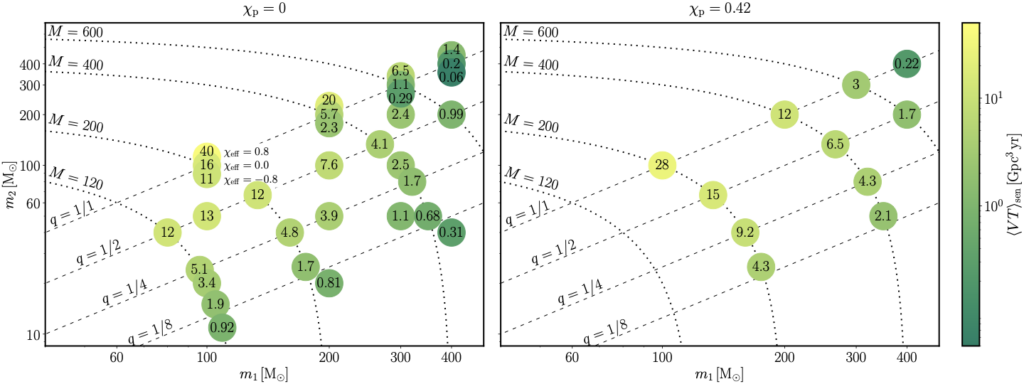
Search for intermediate mass black hole binaries in the third observing run of Advanced LIGO and Advanced Virgo and These monster black holes did not form the usual way—their history of violence is written into spacetime ripples may help constrain whether black-hole ringdown leaves delayed residuals, but the evidence is still indirect.
SummarySearch for intermediate mass black hole binaries in the third observing run of Advanced LIGO and Advanced Virgo and These monster black holes did not form the usual way—their history of violence is written into spacetime ripples may help constrain whether black-hole ringdown leaves delayed residuals, but the evidence is still indirect.
HypothesisCan ringdown residuals in black-hole merger data distinguish the claimed effect from detector noise?
ObjectionThe hypothesis may still be too permissive unless the effect is separated from detector noise.
Next testWhich black-hole merger dataset provides the strongest constraints on delayed ringdown residuals?
Why it matters- It shows whether the topic can be tested with real observations instead of speculative language.
- It keeps the analysis focused on ringdown data, residuals, and clean upper bounds.
- It helps distinguish observational constraints from theoretical storytelling.
Run 1: Define the concrete questionPROMISING
Can ringdown residuals in black-hole merger data distinguish the claimed effect from detector noise?
Search for intermediate mass black hole binaries in the third observing run of Advanced LIGO and Advanced Virgo and These monster black holes did not form the usual way—their history of violence is written into spacetime ripples may help constrain whether black-hole ringdown leaves delayed residuals, but the evidence is still indirect.
SummarySearch for intermediate mass black hole binaries in the third observing run of Advanced LIGO and Advanced Virgo and These monster black holes did not form the usual way—their history of violence is written into spacetime ripples may help constrain whether black-hole ringdown leaves delayed residuals, but the evidence is still indirect.
HypothesisCan ringdown residuals in black-hole merger data distinguish the claimed effect from detector noise?
ObjectionThe topic may still be broad enough that theory, template bias, and observation get conflated.
Next testWhich black-hole merger dataset gives the strongest baseline for delayed ringdown residuals?
Why it matters- It shows whether the topic can be tested with real observations instead of speculative language.
- It keeps the analysis focused on ringdown data, residuals, and clean upper bounds.
- It helps distinguish observational constraints from theoretical storytelling.